Article based on video by
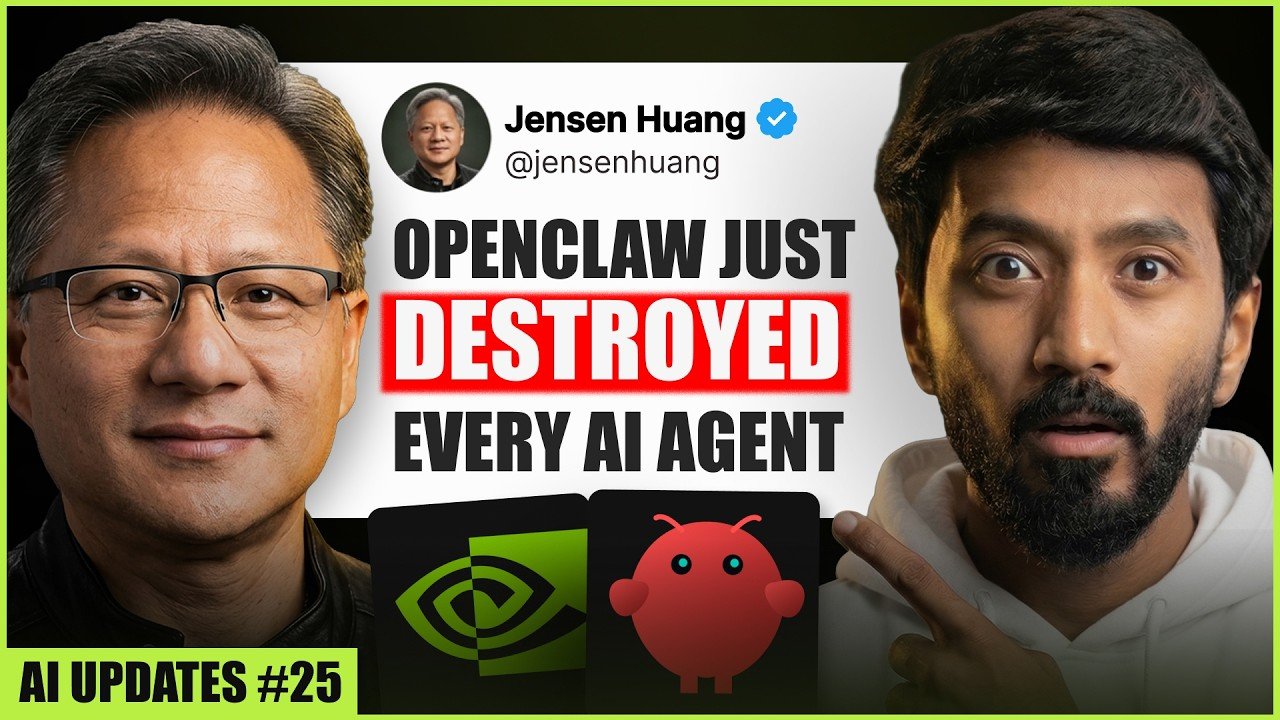
Nvidia’s OpenClaw is being hailed as a game-changing framework for agentic AI, promising to revolutionize how businesses deploy AI solutions. But what makes it so transformational, and how can it reshape the future of enterprise technology? Let’s dive in.
📺 Watch the Original Video
What is the OpenClaw AI Framework?
OpenClaw is an agentic AI framework that Nvidia CEO Jensen Huang describes as “the new Linux” and “the most important software release probably ever.”[2][3] Rather than just generating text, OpenClaw enables autonomous AI agents—called “claws”—that can take actions, use tools, and perform tasks independently.[1][4]
Think of it this way: traditional AI models generate content or reason through problems. OpenClaw agents go further. They can access file systems, integrate with language models, schedule tasks, and evolve their behavior over time.[1] Huang positioned it as marking an “agent inflection point” where AI moves beyond generation and reasoning into actual execution.[4]
The framework has become the fastest-growing open source project in history, even surpassing Linux and Kubernetes in adoption speed.[2][3] That’s not hyperbole—it’s also the most cloned GitHub repository ever.[1] The reason? Every company building AI systems now needs a way to let agents act autonomously, not just think.
Nvidia backed OpenClaw with NemoClaw, an open-source reference implementation that makes deployment secure and straightforward.[3] NemoClaw wraps OpenClaw in guardrails, privacy controls, and resource management—basically a sandbox that keeps your autonomous agents from breaking things.[1] It handles the messy enterprise requirements: auditability, policy enforcement, and safe integration across cloud, on-premises, and Nvidia hardware like RTX PCs.[1]
The shift here is fundamental. Compute used to be measured in floating-point operations per second. Then it became tokens per second. Now with OpenClaw, it’s actions per second—actual work getting done by intelligent agents.[1]
Why OpenClaw Matters in the AI Landscape
OpenClaw is shaping up to be a big deal in the AI world, and Nvidia is at the forefront of this shift. By positioning OpenClaw as “the new Linux,” CEO Jensen Huang highlights its potential to become the leading open-source platform for agentic AI. This isn’t just a catchy phrase; it signals Nvidia’s commitment to leading the charge in a rapidly evolving sector.
One of the standout features of OpenClaw is its focus on collaboration. By fostering a shared environment for developers, Nvidia is encouraging innovation in AI applications. This collaborative spirit not only enhances the development process but also speeds up the creation of more efficient and powerful AI tools. In fact, the company claims that OpenClaw is growing faster than other major platforms like Linux and Kubernetes. That’s impressive!
Security and enterprise readiness are also big selling points for OpenClaw. The introduction of NemoClaw, the reference implementation, simplifies deploying always-on AI assistants while incorporating robust security features. This means that businesses can adopt AI solutions without compromising on data privacy or operational security. The promise of being “enterprise secure” makes it clear that Nvidia is serious about meeting the needs of organizations looking to implement AI responsibly.
In a nutshell, OpenClaw positions Nvidia as a leader in the AI landscape while creating a collaborative and secure environment for developers. This could pave the way for the next wave of innovative AI applications that are not only effective but also safe to use in various settings. So, if you’re in the tech space, keeping an eye on OpenClaw isn’t just a good idea — it’s essential.
How to Utilize OpenClaw and NemoClaw
Getting Started with NemoClaw
If you’re looking to deploy AI assistants quickly, NemoClaw is a great place to start. With just a single command, you can launch an always-on AI assistant, making it incredibly user-friendly. This simplicity is a real advantage, especially for those who might feel overwhelmed by the complexities of AI deployment.
NemoClaw isn’t just about easy setup; it also includes robust features for resource management and tool access. For instance, it connects seamlessly with large language models (LLMs), which means you can harness powerful AI capabilities without a steep learning curve. The aim here is to make AI accessible and efficient for everyone, from small startups to larger enterprises.
Honestly, that straightforward deployment process is a bit of a breath of fresh air in the tech world.
Integrating Custom Models
One of the standout features of NemoClaw is the ability to integrate your own custom AI models. This means you can tailor solutions that fit your specific needs. Whether you’re working on a unique project or have particular requirements for your AI assistant, this flexibility lets you customize how it operates.
NemoClaw supports various models through Nvidia’s open model initiative. This initiative encourages developers to push the boundaries of AI by making it easier to incorporate different models into the system. For example, you could integrate a model like Nemotron™ to enhance your assistant’s capabilities.
With this kind of support, it’s clear that Nvidia is committed to fostering innovation in the AI space.
Real-World Applications of OpenClaw
Enterprise Use Cases
OpenClaw is shaping the future of operational efficiency in businesses. Companies can implement it to streamline various processes, from task scheduling to resource management. For instance, organizations are using autonomous agents powered by OpenClaw to perform real-time scheduling and manage workflows, leading to significant productivity gains.
A prime example is how enterprises can deploy NemoClaw, Nvidia’s open-source stack for always-on AI assistants. With a single command, businesses can set up AI agents that manage everything from file systems to custom models. This capability not only saves time but also helps in reducing operational costs.
In practice, a company adopting OpenClaw might see up to a 30% increase in efficiency over traditional methods. Sounds impressive, right?
Innovative AI Solutions
The flexibility of OpenClaw shines in various environments, whether cloud-based or on-premises. This adaptability allows companies to tailor the technology to their specific needs, offering robust solutions that fit different operational styles.
For example, businesses utilizing OpenClaw can integrate various agentic AI capabilities like scheduling and cron jobs, which can run seamlessly regardless of where the infrastructure is hosted. This is particularly beneficial for teams operating across multiple locations or those looking to scale efficiently.
Moreover, the incorporation of policy-based guardrails ensures that these AI agents operate securely, safeguarding sensitive data while providing advanced functionalities. As organizations continue to explore AI solutions, OpenClaw stands out as a cornerstone for developing innovative, efficient systems that truly adapt to the demands of the modern workforce.
The Future of Agentic AI with OpenClaw
OpenClaw is making waves in the world of agentic AI, promising to speed up the adoption of automated workflows across various industries. Think of it as a new layer of technology that helps AI systems work more independently and effectively.
Nvidia’s approach to this is particularly interesting. By committing to an open-source model, they’re inviting collaboration from developers everywhere. This openness is crucial because it allows for a diverse range of ideas and innovations to emerge, which can only enhance the capabilities of agentic AI. Imagine how quickly things can evolve when talented minds from different backgrounds come together.
Predictions surrounding AI growth are pretty optimistic, too. Some experts suggest that advancements in AI could contribute to an economic boost of around $15.7 trillion by 2030. That’s a staggering number! It highlights just how vital structures like OpenClaw are—they’re not just tech novelties; they could significantly impact our economy.
The potential of OpenClaw shines through its features like NemoClaw, which streamlines the deployment of AI assistants with just a single command. This ease of use could be a game-changer for businesses looking to implement AI solutions without getting bogged down in technical complexities.
In practice, this means more companies might jump aboard the AI train, leading to faster innovation and deployment. As we continue to embrace this technology, OpenClaw might not just be the future of AI; it could redefine how we interact with technology altogether. So, keep an eye on this space—it’s shaping up to be quite exciting!
Frequently Asked Questions
What is OpenClaw AI framework?
OpenClaw is an open-source AI framework developed by Nvidia, designed to facilitate the deployment of agentic AI applications. It aims to be a foundational platform for building intelligent agents, often described as the ‘new Linux’ for AI.
How does Nvidia’s OpenClaw compare to other AI frameworks?
OpenClaw is being positioned as potentially more impactful than frameworks like Kubernetes or HTML, with claims of faster growth and a focus on agentic capabilities. It integrates advanced features for managing resources and connecting to large language models, making it a robust choice for developers.
What are the benefits of using NemoClaw?
NemoClaw simplifies the deployment of always-on AI assistants with just one command, ensuring a secure and high-performance environment for enterprise applications. It includes built-in privacy and security controls, making it ideal for sensitive operational contexts.
Can I integrate my own AI models with OpenClaw?
Yes, OpenClaw supports the integration of custom AI models, allowing developers to leverage Nvidia’s open model initiative for enhanced functionality. This flexibility positions OpenClaw as a versatile platform for a wide range of AI applications.
What industries can benefit from OpenClaw technology?
OpenClaw technology can benefit various industries, including healthcare, finance, and manufacturing, by enabling advanced AI solutions for automation and decision-making. Its secure and scalable nature makes it suitable for any sector looking to leverage agentic AI.
Explore how OpenClaw can transform your AI strategies today.
Subscribe to Fix AI Tools for weekly AI & tech insights.
Onur
AI Content Strategist & Tech Writer
Covers AI, machine learning, and enterprise technology trends. Focused on practical applications and real-world impact across the data ecosystem.
LinkedIn ↗Related Guides